
Key Challenges Banks Face When Adopting Instant Payments
Banks adopting instant payments face five connected gaps, from batch-based cores that can't post in seconds to liquidity management that stops at 5 p.m. Each gap has to close before launch.

Banks adopting instant payments face five connected gaps, from batch-based cores that can't post in seconds to liquidity management that stops at 5 p.m. Each gap has to close before launch.

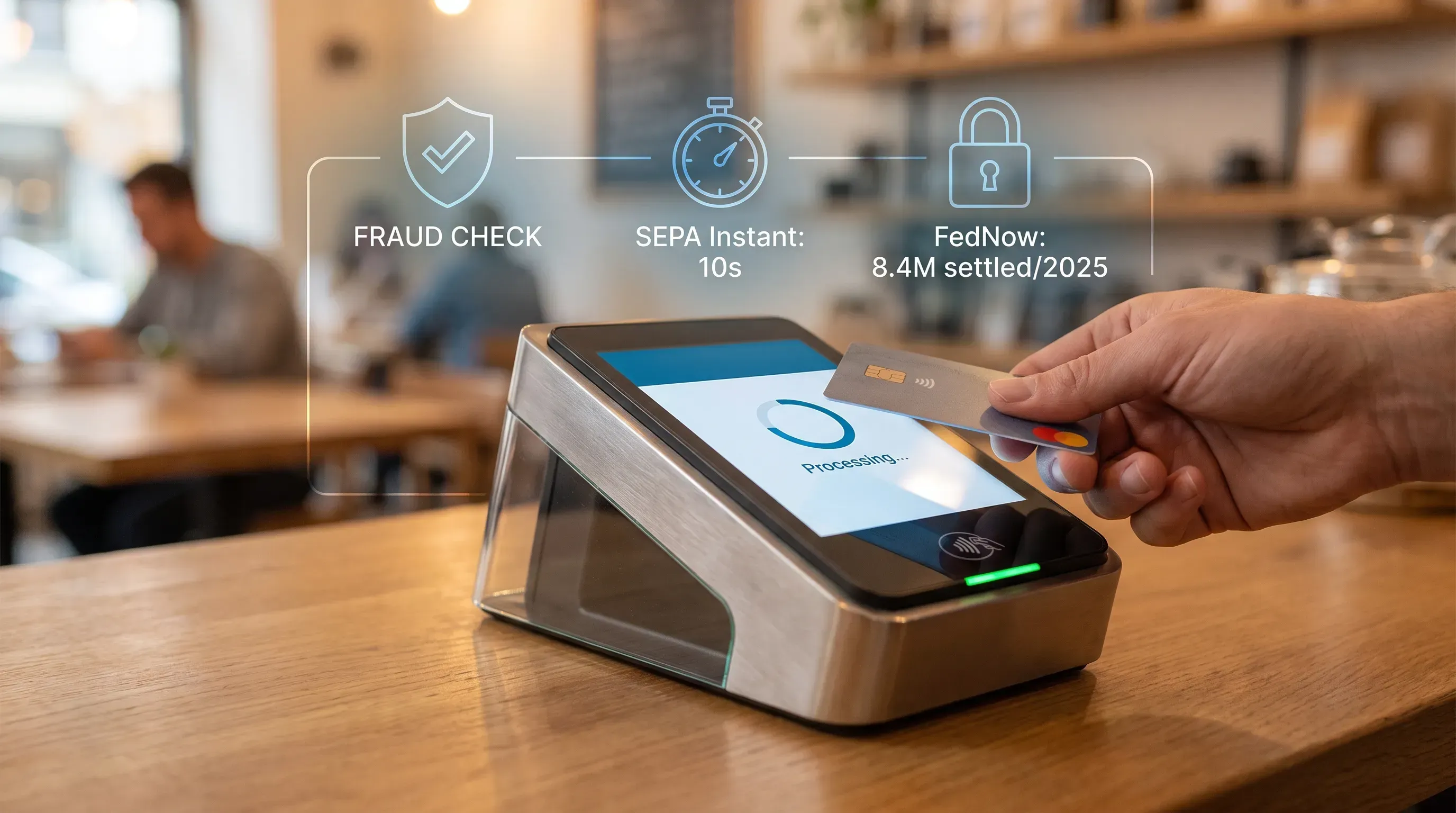
European instant payments run on SEPA Instant Credit Transfer (SCT Inst), the European Payments Council scheme for euro credit transfers cleared and settled continuously in seconds. Payer banks send ISO 20022 instructions through either RT1 or TIPS, and the beneficiary bank credits the account and returns a status inside ten seconds every day of the year.

Real-time bank transfers work when authorization and settlement run as one continuous flow instead of separate batch steps. That requires a payment switch and an always-on authorization engine. Scheme rules set the deadline.

Instant payments move money account-to-account in seconds, 24/7/365, with immediate confirmation and funds the recipient can spend right away. The mechanics are similar everywhere and run from initiation through settlement. What changes by country is the operator and the settlement model.

Modern payment platforms scale through horizontal scaling of stateless services behind load balancers. Microservices isolate authorization from ledger and settlement work, while multi-region deployment keeps processing close to customers. Queues absorb spikes and idempotency keys prevent double charges. Double-entry ledgers keep balances correct when infrastructure fails underneath them.

A gateway captures and secures payment data at the point of entry. A processor carries authorization messages between the acquirer and the issuer, then handles clearing and settlement. A switch decides where each message goes. Three separate responsibilities, frequently sold together under one contract, which is where the confusion starts.

A financial institution processes a transaction in real time through an always-available system that validates and posts it in seconds, with decision and confirmation built into the flow. An incoming request passes through synchronous APIs for immediate checks and asynchronous events for parallel work. Authorization and fraud screening finish inside the same tight, continuous window as ledger posting and customer notification.

A card payment runs in two separate acts. Authorization takes about two seconds and only reserves money: the terminal sends a message through the acquirer to the issuer, which replies approve or decline. Clearing then batches that sale and settlement moves the actual funds, so the merchant is paid one to three business days later.

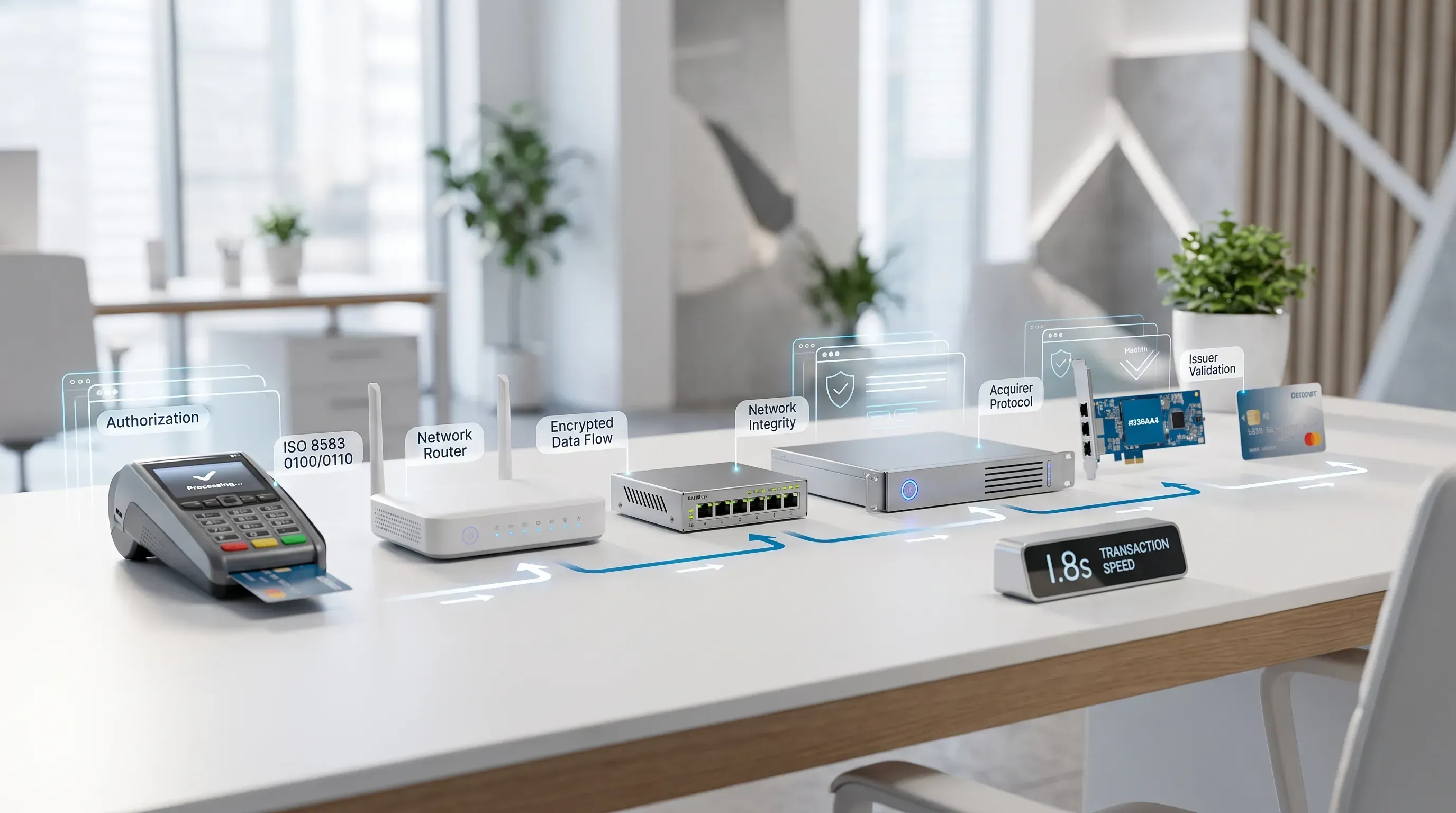
A card payment travels from the terminal through the acquirer's processor and a switch that picks the path before crossing the card scheme to the issuing bank and returning along the same chain with an approve or decline. Six participants move the payment in two directions on a round trip that finishes in under two seconds.

The most damaging fintech security mistakes are architectural rather than tactical. Weak identity controls and secrets stored in code are common examples. Flat networks can also cause damage. Incomplete logging and fraud detection that never talks to the security stack create further risks. Each one lets a single compromise reach money movement and customer data at once, which is why they must be designed out before launch.

Payment systems protect card data with encryption and tokenization wherever the data moves or rests. Masking limits its display. Hardware security modules and token vaults enforce those controls through tightly scoped APIs. The strongest designs remove plaintext card data from general systems at capture, so most components never touch a real card number at all.

The key management lifecycle is the governed sequence that directs a cryptographic key's states and operations from creation to destruction. In a fintech payment system, it protects each key through limits on permitted use and cryptoperiod. It also records every sensitive event so you can prove control.

Banks manage encryption keys at scale through a controlled key lifecycle inside tamper-resistant hardware security modules. A central key management system coordinates the modules, and split human control ensures no one person holds a full key. Automation extends the same policy across regions and high transaction volumes.

A hardware security module (HSM) in payments is a tamper-resistant device that generates and uses cryptographic keys stored inside a sealed boundary, so those keys never reach application memory in clear text. It acts as the root of trust for the whole payment system because it performs PIN encryption and key management during every card transaction. It also performs EMV cryptography during those transactions.

This article walks through what actually changes inside a bank or payment service provider when instant SEPA payments move from a mandate on a slide to a live production flow. It covers core banking integration and the ten-second window, alongside the trade-offs a team faces before committing an architecture and a timeline.

This article explains how to build digital wallets infrastructure that uses APIs to connect with payment rails and turn a demo wallet into production-grade regulated infrastructure. It walks through the ledger and the compliance controls, along with payment rails for the three use cases teams are asked to support, so you can scope and sequence your own build.

This article walks through how the SEPA Instant Credit Transfer scheme actually works and explains the hard limits you design around, including the ten-second settlement window. It then turns to the harder part: what running instant SEPA payments at scale demands operationally, including 24/7 uptime amid real-time compliance and liquidity pressure.

This article walks a card transaction from the moment data is captured to final settlement and shows which control protects each stage. You will finish able to map your own architecture against a stage-by-stage set of controls and find the gaps where sensitive data leaks out or PCI scope quietly grows.

From a fintech infrastructure engineering perspective, this article walks through the full money-movement stack layer by layer, then follows a single live transaction across all of it. The goal is to help you reason about latency and failure across the whole path, with reconciliation treated as part of that same path.

This article explains how a modern core banking platform works and what it takes to build one that grows with you. It walks through the ledger and the APIs that surround the core, with payment integrations handled as part of that architecture, then treats scalability and compliance as design constraints you decide early.

This article walks through payment systems development as one connected transaction flow, from the customer tap to final settlement. It covers each layer of the stack before turning to integration risk and the build-or-outsource decision.

This article explains how a payment analytics platform turns raw transaction data into intelligence your teams can act on. It walks through the payment analytics platform pipeline from ingestion to warehousing and the trade-off between real-time and batch processing before it turns to the use cases that pay for the whole thing.

This article breaks down what separates bank-grade IAM systems, in the genuine sense, from ordinary enterprise identity and access management. It explains the architectural pillars that define the tier and connects them to the regulations you answer to, so you can judge the right delivery path.

This article explains why, in identity and access management fintech, identity is the security foundation every payment platform depends on, and how authentication and access governance work as one system. It walks through modern login methods and permission design under the compliance rules that follow, so you can judge the maturity of your own setup.

This article is a design guide for building a wallet that holds and moves real customer money across more than one payment rail. It walks through the ledger and the transaction engine, then connects those layers to KYC-gated accounts and rail integrations, with the deepest focus on reconciliation, because that is where most builds quietly break.

This article explains what it takes in multi-rail wallet development to build a wallet that moves money across cards and SEPA while also handling real-time payments and QR from a single system. It walks through the orchestration layer that makes coordination work, then digs into the hardest problem in the space: keeping money consistent when every rail settles on its own terms.

This article walks through how chip card processing actually works, from the moment a card is presented to the final authorization decision, and what it takes to certify EMV POS software before you can go live. It's written for teams scoping or starting a chip payment build who can write software but haven't shipped a payment terminal before.

This article is a full lifecycle guide to payment terminal software development, written for the people who have to take a terminal program from concept to a live fleet. It follows the lifecycle from build to maintenance and shows where each stage quietly turns into a multi-year commitment.

This article explains what changes when you engineer embedded POS software by moving the payment stack into the device itself instead of building an app on someone else's certified terminal. It walks through the engineering layers involved, with the constraints behind each decision folded into how certification reshapes the entire project from day one.

This article explains how real-time POS terminal software development shapes the software inside a payment terminal to move a card payment through the device quickly and securely. It follows the layered architecture and traces one transaction from tap to response under the latency budgets and certification rules that shape every choice you make, with offline behavior treated as part of that constraint.

This article explains anti-fraud architecture as one connected stack of coordinated controls. It walks through the layered model end to end: each layer's job at its place in the customer journey, plus the way the layers feed one another so decisions sharpen over time.

This article shows how payment security architecture decides your compliance scope before you write a single control. It walks through where data substitution sits in the flow and what each placement does to the cardholder data environment. The artifacts a QSA will demand during a PCI DSS compliance assessment come later.

This article explains what a payment authorization engine is and how teams can use it to approve more good transactions without inviting fraud or operational overhead. It grounds the basics in familiar credit card authorization, then shows how the engine fits inside a wider payment orchestration setup.

This article walks through how SEPA Instant infrastructure moves a euro payment from the payer's instruction to settled funds in the payee's account in under ten seconds. It traces the parties and clearing and settlement mechanics, then maps the EU rules you now have to meet so you can scope connection work with confidence, whether the project is a build or a compliance effort.

This article walks through how real-time payments platforms actually work across the stages from initiation through confirmation. It then covers the always-on RTP infrastructure demands that span every stage, and closes with practical guidance on which delivery model to choose.

This article walks through the workstreams that decide whether a visa card issuing program ships on time, from integration with Visa's systems through certification under scheme compliance rules. It explains how they depend on each other so you can sequence the work and lock down the decisions that matter early.

This article explains how digital card issuance works and why it sits at the center of modern payment systems. We walk through what happens behind the scenes when a card appears on a phone, from issuer approval to a card ready for tap-to-pay, and we look at what it means for issuers and the people who carry their cards.

This article is a technical look at how a virtual card issuing platform works beneath the surface. We walk through the core architecture, the security and compliance controls that protect cardholder data, the fraud systems that watch transactions in real time, and the design choices that let the platform grow without slowing down.

In this article, we explain what instant debit cards are and how the technology lets customers spend within seconds of opening an account. We walk through the customer flow, the benefits for both sides of the transaction, the security behind it, and where the technology is heading.

This article explains how virtual card issuing works under the hood and why it has become a core building block for fintech products. It walks through the infrastructure, common use cases, security obligations, and the criteria that matter when picking a provider.

This article explains how white label card issuing works and helps fintech founders and product leaders decide whether to license a ready-made platform or build their own stack. It covers the trade-offs and what to verify before signing anything.

This article walks fintech leaders and product-engineering teams through the architectural layers behind a modern card issuing platform. We break down the stack from the issuing processor to the API gateway, then show how the pieces cooperate during a live authorization before the article closes with a checklist for evaluating any vendor or in-house build.

This article breaks down the systems behind instant issue debit cards that let banks and fintechs put a working debit card in a customer's hands within minutes. We'll walk through the two delivery models in use today and the technical pipeline that runs underneath them, where the compliance work keeps the whole thing safe.

This article explains what a card issuer is and what it actually does inside the payments stack. We separate the issuer from the other parties in the payment flow, then walk through the duties and rules that sit behind every card put into a customer's hand.

This article is a practical guide for fintech operators and product leaders who want to launch or scale a card program in regulated markets. It walks through how the issuing lifecycle works under its compliance layer and how infrastructure choices determine whether a program scales or stalls.

This article explains the ISO 20022 payment system, including why the financial industry adopted it and how the standard reshapes payment data exchange between banks and the corporate or regulatory teams that rely on them. You'll get a clear view of the timeline, the benefits, the operational challenges, and what comes next.

This article explains the role of a payment switch at the center of every card and account-to-account flow and what it takes to build one that survives real production load. We walk through routing, authorization, message handling, integrations, security, and the engineering practices that separate a switch built to last from one that buckles under traffic.

This article walks technical leads and security architects through the practical decisions behind moving hardware security modules from on-prem racks to cloud services. It compares AWS and Azure offerings against legacy appliances and shows how hybrid cryptographic infrastructure can fit into a migration sequence with rollback options.

This article is a technical walkthrough for engineers and payment architects who build or maintain card transaction messaging systems. It covers message structure, transaction flows, scheme dialects, and the production concerns that separate a fragile switch from one that runs for a decade without surprises.

If your fintech handles card data and you're not sure how your HSM fits into PCI compliance, you're already behind. The gap between "we have an HSM" and "our HSM integration actually passes audit" is where most teams stumble.

Every payment transaction you process depends on cryptographic keys that must never be exposed. If the software layer between your application and the hardware security module (HSM) is poorly designed, even the best tamper-resistant hardware won't save you from breaches, failed audits, or crippling downtime.

Every card tap, every ATM withdrawal, every online checkout depends on cryptographic keys that must never be exposed. When those keys leak, the entire payment chain collapses. So how do you build infrastructure that keeps secrets secret at massive scale?